H1

H2

H3

H4

Para Large

Para Regular

Caption

Button Text

Immihealth: AI Chatbot for Hospital Navigation

Reducing navigation stress and wait times at the University of Michigan Hospital through an accessible, multilingual AI chatbot solution.

92%

User Satisfaction

44%

Fewer Inquiries

3.5min

Avg. Navigation Time

31%

Satisfaction Increase

Aspects of this project are confidential & can’t be displayed publicly. If you’d like to know more about my process, schedule a portfolio presentation.
Overview

ImmiHealth is a student-led tech startup focused on making healthcare more accessible for immigrants and non-English speakers. We partnered with the University of Michigan Hospital's Patient Experience Team for over a year to tackle various healthcare accessibility challenges. Navigation was one of them.
"It takes visitors about 14 minutes to reach their destination; 7 minutes even after asking for help. And that's just after getting to the right floor. Navigation is a real challenge here."
— Patient Experience Team, University of Michigan Hospital
Role
UX Researcher & Designer
Timeline
2024 / 6 Months
Tools
Figma, Miro, ChatGPT
Client
University of Michigan Hospital
Collaborators
1 marketing specialist, 1 developer

The Problem

Navigation challenges at one of America's largest hospital systems.

Hospital Scale

20+ Clinical Departments
1000+ Beds
9 Basic Departments
2.9M Square Meters

Hospital's Existing Solution

The hospital ran a volunteer program where undergraduate students stood at specific locations throughout the facility to help visitors navigate. While helpful, this approach was limited by volunteer availability and couldn't serve all patients, especially non-English speakers.

Impact on Patients

12-15 minutes added wait time from navigation issues
65% of patients reporting stress and frustration
25-30% reduction in patient satisfaction scores

Target Users

Navigation challenges at one of America's largest hospital systems.

Primary Users:

First time visitors and immigrants Secondary Stakeholders:
Elderly patients needing simple, accessible navigation
Frequent patients wanting quick, autonomous wayfinding

Secondary Stakeholders:

Hospital volunteers whose time could be better spent on complex patient needs
Patient Experience Team seeking measurable improvements in satisfaction scores
Hospital Administration looking to reduce late arrivals (34% of appointments)

Constraints and Ideation

Possible solutions and how we arrived to our solution.

Integration with the hospital's IT Infrastructure

We wanted to integrate with the hospital's IT infrastructure so that users have an easier way of accessing navigation features, but that was not allowed as we were an outside organization and that would directly violate HIPAA.

Indoor GPS wayfinding

We wanted to use using Bluetooth beacons for real-time positioning, but our limited funding did not allow that solution.

Appointment-integrated directions

We wanted to automatically pull patient appointment data and proactively provides directions, however we were not allowed to access user data as that would violate HIPAA.

Stand-alone Mobile Chatbot

Why it works: no personal data required so it's HIPAA compliant, simple infrastructure, quick to implement, easy for users to adopt (no app download, just scan and go), low cost, is multilingual by design to help non-English speakers.

Research & Design Principles

Since I was not allowed to talk to users directly since that would directly violate HIPAA, secondary research shaped my UX approach.

Hold context from conversation

Have close to 0 response time

Always provide option to talk to human/get out of the chatbot flow

Warn before repeating an answer

Saying "I don't understand" is less frustrating than giving the wrong answer

Politely tell user to only ask for direction if they ask any other information

MVP Solution

Possible solutions and how we arrived to our solution.

Core Solution

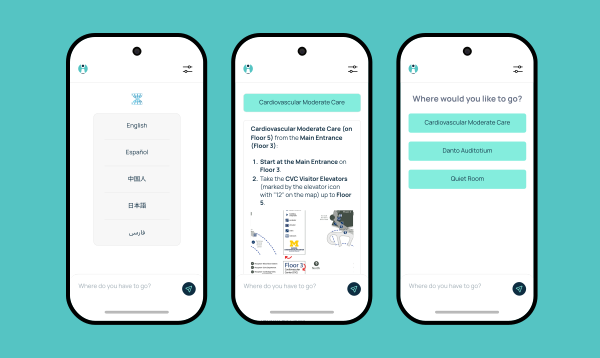
An AI-powered chatbot that provides instant navigation assistance through simple QR code access. No app downloads, no account creation, no personal information required.

Scan QR code placed throughout the hospital

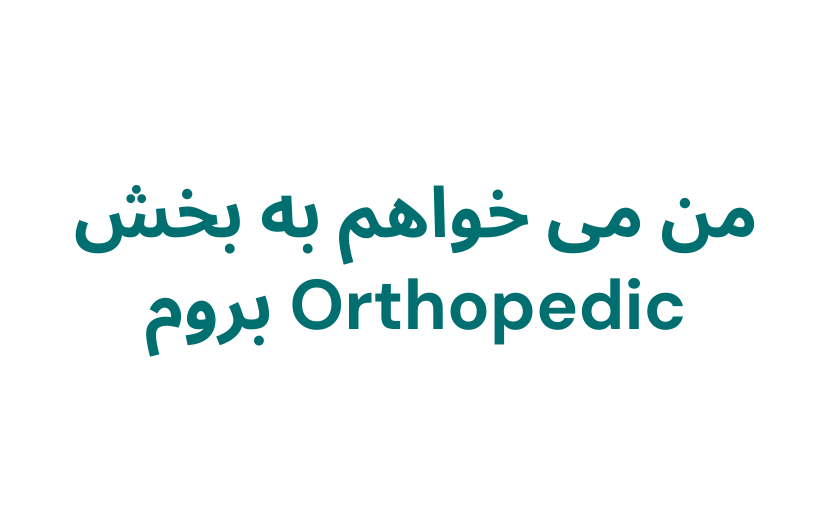
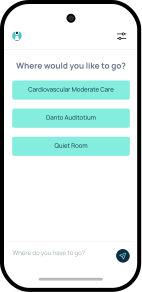
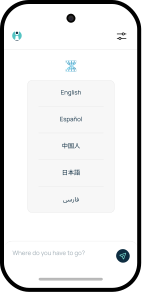
Ask where you want to go in your preferred language

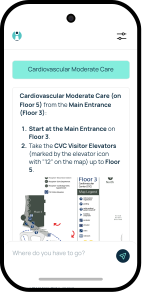
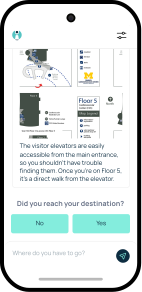
Get instant directions to your destination

Key Features

Multilingual support serves non-English speakers in their preferred language

HIPAA Compliant, no personal information collection or storage

Zero friction access - no app downloads or account creation required

MVP Results

Initial deployment showed promising impact.
User Satisfaction

88%

Navigation Inquiries

From 65% to 45.5%

Late Arrivals

From 34% to 29%

Avg. Time to Destination

From 7 min 4.5 min

Permission to Conduct User Research

These results got the hospital's trust in us, which gave us the opportunity to conduct direct user research through Wizard of Oz tests and ethnographic studies to understand user expectations, friction points, and drop-off moments.

Research Findings and Iterations

User feedback and research revealed opportunities for enhancement.

Quick Fixes

Visual Directions

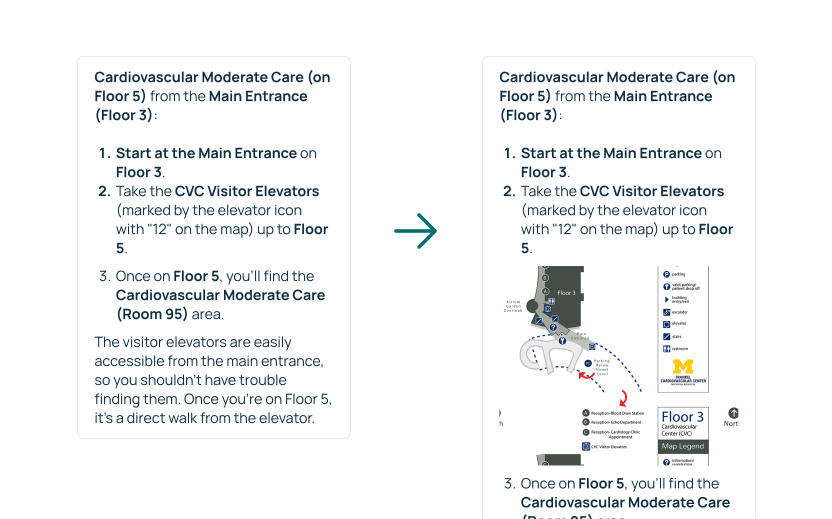
Added images of maps in addition to text-based directions for better comprehension

Medical Terminology

Included English words for medical terms since many users only knew them in English, not their preferred language

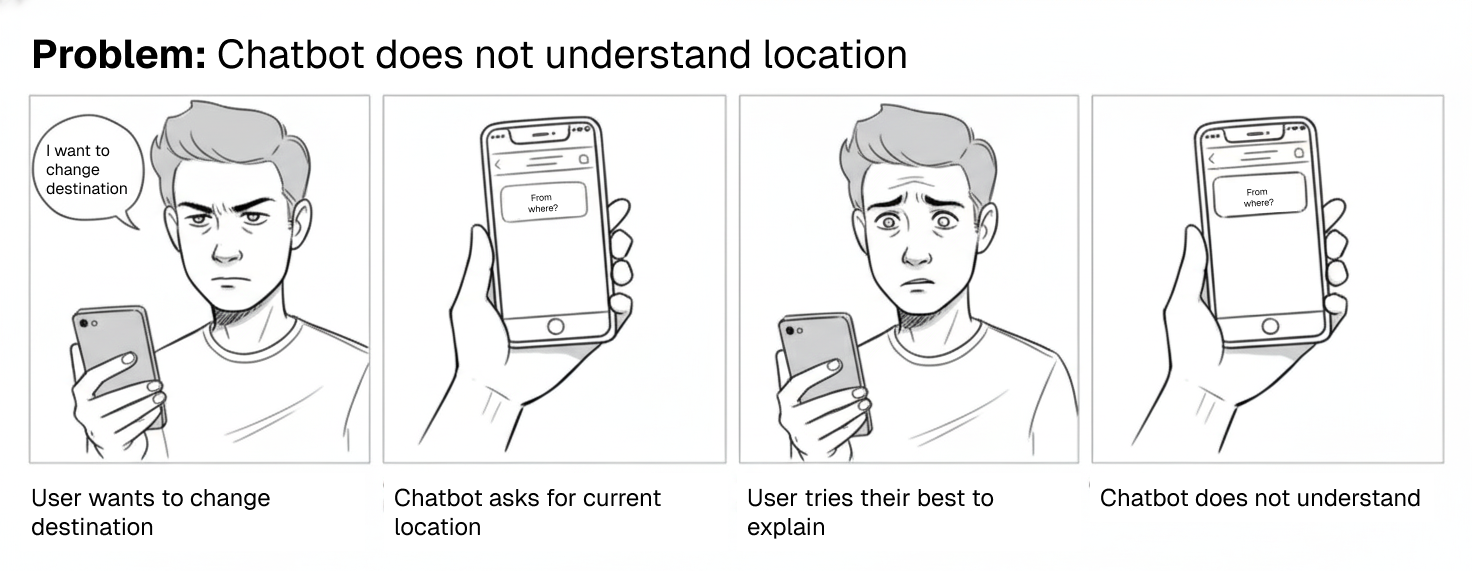
Major Challenge: Location

Users scanning QR codes from random locations couldn't effectively communicate where they were. The chatbot struggled to understand user descriptions of their current location, especially when users needed to change destinations mid-journey.

Solution Exploration

Tweak the Dataset

Would require significant data collection effort beyond our resources

Manual Room Mapping

Mapping every room would be time-intensive and difficult to maintain

Numbered QR Code Posters

We would ask the user to enter the number on the poster to identify their location, but that means added friction (extra user action), potential for language barriers and user error (entering wrong number)

Location-Specific QR Codes

Different QR codes at different locations automatically provide the chatbot with user's current position

How it works: Reception QR code tells chatbot user is at reception, South Entrance QR code indicates South Entrance, etc. Users get contextual directions without any additional input.

Revised Solution

Location specific QR codes + small usability tweaks.

Final Results

Significant improvements across all key metrics.
User Satisfaction

From 88% (MVP) to 92%

Navigation Inquiries

From 65% to 36%

Late Arrivals

From 34% to 27.5%

Avg. Time to Destination

From 7 min 3.5 min

31%

Increase in Overall Patient Satisfaction Scores (Quarterly surveys by Patient Experience Team)

What Users Said

Real feedback from hospital visitors
I felt so much less stressed knowing I could get directions in Spanish.
Maria Alvarez
First-Time Visitor, Non-English Speaker
I love how easy it is to use.
John Carter
Frequent Patient & Senior Citizen
Super convenient! I'm lowkey glad I don't have to talk to anyone to get directions.
Jason Lee
Young Adult, First-Time Visitor

Key Takeaways

Designing Under Constraints

Limited access to users taught me to leverage secondary research strategically and validate assumptions through creative methods like Wizard of Oz testing once the MVP proved valuable.

Sometimes Simple Wins

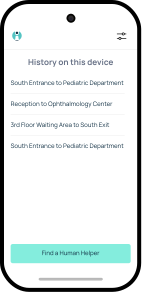
We considered complex features (history tracking, appointment integration), but the HIPAA-compliant standalone approach proved most effective. The best solution isn't always the most feature-rich.

Context is Everything

The location-specific QR code insight came from observing real user behavior. Mid-journey navigation failures revealed that users don't need smarter AI, they need the system to already know where they are.

Impact Over Perfection

As students with limited resources, we focused on solving one problem exceptionally well rather than tackling multiple problems poorly. A 50% reduction in navigation time proved we didn't need hospital data access to create meaningful change.

Other Projects